
Kempini guides · Prepared and updated
You do not have to know what it is
An object may have been called a Roman mosaic, an Italian brooch or a Grand Tour souvenir in the family. It may have no name or paperwork at all. You do not need to turn that uncertain description into a formal attribution before asking someone to look.
Kempini can begin with photographs of one piece or several. There is no need to decide immediately whether to keep, research or sell. The first enquiry is private and creates no obligation; you can choose not to continue.
If you want background first, the identification guide explains the surface and construction, and the value guide explains why a name, age or asking price is not enough to establish worth.
Before doing anything
Resist the urge to make the object look newer or tidier. Original surfaces, old mounts and even modest labels may help explain its history. An apparently minor change can remove information or introduce damage.
- Do not wash, soak, polish or use household cleaners or solvents.
- Do not scratch or probe the surface to identify the material.
- Do not glue loose tesserae, renew joints or fill missing areas.
- Do not remove a panel from its frame or jewellery from its mount.
- Do not discard frames, cases, boxes, labels, notes or receipts.
Keep handling to a minimum and leave the object in a safe, stable place. Do not turn over a heavy table or handle an unstable object just to obtain a back photograph. If parts are loose, keep them with the object without attempting a repair.
Ask for a private first review before commissioning cleaning or changes. The first review is not a conservation treatment plan; the aim is to preserve the possibility of informed examination.
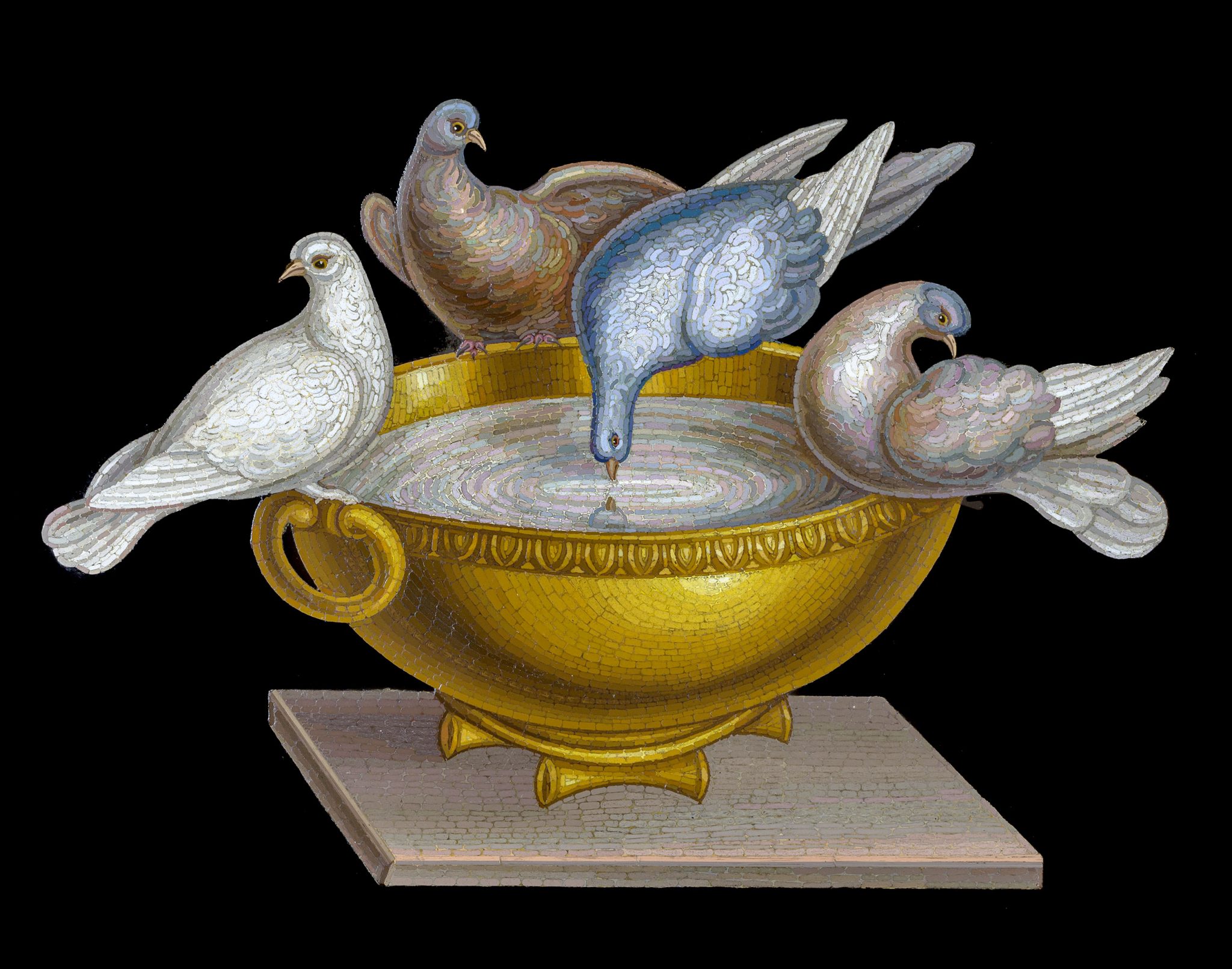
Photograph what you can safely show
A phone is sufficient. Start with the complete front, then an accessible back and a sharp close detail of the image surface. Include the setting, frame or visible label if you can do so without moving parts. Approximate dimensions in centimetres, inches or another common unit are enough.
For several pieces, a group overview is useful. You do not have to catalogue every item or supply a condition report before getting in touch. The form accepts up to eight images; further photographs can be discussed later if necessary.
These are practical suggestions, not a requirement to dismantle or transport anything. If a view is not safely available, send what you have. You do not need to identify a maker, date, material, provenance or object type.
Keep the history; do not feel obliged to research it first
Old correspondence, invoices, labels, auction references and photographs can add context. Keep them together where possible, but you need not trace a complete ownership history before your first enquiry.
Family recollection and documentary evidence are different things. Both may be worth preserving. Note what was said and by whom rather than turning an uncertain story into a definite attribution. Do not remove a label to read what may be underneath it.
A later review may ask for relevant documents, with unrelated personal details obscured where appropriate. Do not upload wills, passports, account information or other sensitive family documents to the initial object form.
What Kempini considers
The first review looks at the piece as a whole: the use of the tesserae, composition, visible condition, setting and any relevant information you have chosen to provide. A known name can be helpful, but a signature is not a prerequisite for an enquiry.
Damage, earlier restoration or missing paperwork does not mean you should decide that a piece is unworthy of attention. Equally, no review can promise that an inherited object will be valuable or suitable for purchase. Where photographs leave questions unresolved, further images or inspection may be necessary.
Possible next steps
- You send photographs and approximate dimensions. Add one contact method and privacy consent. Expected price and a note are optional.
- Kempini reviews the information privately. Further photographs, questions or examination of the original may be useful.
- You choose whether to continue. A possible direct acquisition may be discussed if appropriate, but an offer is not promised and you are not obliged to sell.
Do not ship an object before arrangements are agreed. If an estate or several family members are involved, practical questions about authority to sell can be addressed if a transaction is being considered; the initial form does not ask you to resolve these matters.
Kempini’s first image review is specialist art-market discussion, not legal, tax, probate or insurance advice. It is not a formal appraisal, authentication, certificate or guarantee. If a formal estate valuation or legal decision is required, seek the appropriate independent professional advice.
Your enquiry remains private
Submitted photographs are not placed in a public listing or published without permission. The files and form data in private website storage are scheduled for automatic deletion after 30 days. Email notifications, subsequent correspondence and any separately held records are not covered by that R2 deletion rule.
Read the privacy notice before submitting. For a private discussion without the form, you can email [email protected]. You do not need to commit to a sale to make contact.
Scope and corrections
This guide offers a practical first sequence for an owner, not an object-specific diagnosis or conservation instruction. Images are from the existing Kempini archive and do not document an estate or a client transaction. For the technique and history, see the sources in the micromosaic introduction.
Corrections or additional documentation: [email protected].