
Kempini guides · Prepared and updated
The short answer
Two objects described online as “antique Roman micromosaics” may be very different works. One may preserve subtle, directional glasswork within its original setting; another may have extensive restoration, a later mount or an uncertain attribution. A generic description cannot capture those differences.
There is therefore no responsible single price band for everything called a micromosaic. An advertised asking price is not evidence that a transaction occurred, and a familiar subject is not enough to identify a comparable. The useful question is what can be established about this particular object.
If you are not yet sure that the object is a micromosaic, the identification guide explains the basic construction. You can also simply send photographs; identification is not a prerequisite for contacting Kempini.
Eight factors that matter
1. The use of the tesserae
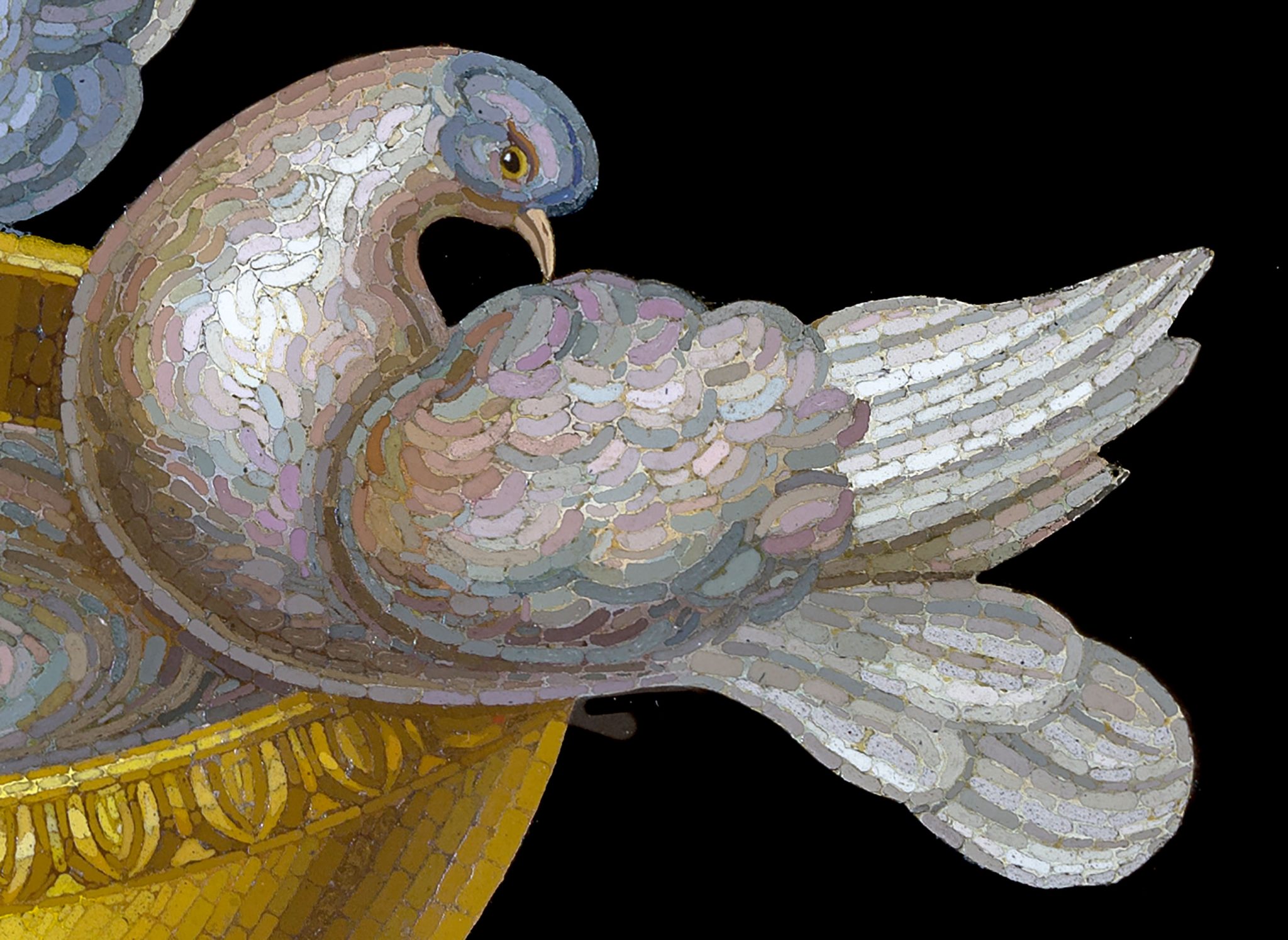
The size of the pieces is only one observation. A specialist also looks at their shape, spacing and direction, and at how they describe contours, surface or movement. A dense field of small tesserae can be technically laborious without producing a convincing image.
Look at a bird’s feathers or a passage of water: does the arrangement follow the subject, or merely fill the area? Counting tesserae cannot establish a maker, date, authenticity or a market value.
2. Colour, light and texture
Fine transitions between tones can give a face volume, differentiate fur from stone or carry light across a landscape. The breadth and use of the colour palette matter alongside the scale of the work. Sharp phone photographs are useful, but lighting, glare and screen colour can distort these effects.
3. Maker, workshop and strength of attribution
A documented maker or workshop can be significant. The strength of the evidence matters as much as the name. A signed work, an attribution based on comparison and a family tradition are different kinds of information and should not be presented as equivalent.
A signature should be considered with the execution, support, mount and documentation. It is not a stand-alone authentication test. Conversely, an unsigned work may be accomplished and worth investigating.
4. Subject, composition, rarity and scale
Roman views, flowers, animals and classical subjects appear in many qualities and formats. Familiarity with the image does not establish the standing of a particular version. How confidently the composition is carried through, the complexity of the subject and the relationship between image and format all deserve attention.
Scale changes the practical and artistic demands, but larger is not automatically more valuable. A small jewel and a table top should be assessed in their own categories, not by surface area alone.
5. Period and school
Date and place of manufacture can influence interpretation and demand. They need evidence from construction, technique, documentation and suitable comparisons. “Roman” in a dealer’s description does not necessarily mean Roman antiquity, and a Grand Tour subject does not prove a nineteenth-century date.
Later work can be carefully made, while older work varies widely in quality. Age is context rather than a universal price multiplier.
6. Condition and earlier restoration
Losses, cracks, loose sections, fills, resurfacing and altered supports may affect both appearance and interpretation. Restoration is not a simple yes-or-no category: its extent, location and effect on original material matter. Some changes are hard to identify from an overall photograph.
Do not wash, polish, regrout or glue the piece to make it more presentable. Leave loose elements undisturbed and photograph visible problems without handling the object unnecessarily. An original surface can carry information that cleaning would obscure.
7. Setting, mount and complete-object context
A panel, brooch, box or table top is more than its mosaic insert. Metalwork, frame, support and furniture context can contribute to the whole. Later changes may be visible at the edges or back; they do not always mean that the image itself is later.
Do not remove a panel or take jewellery apart to look for marks. Photographs of accessible surfaces are enough to start, and any further examination can be discussed.
8. Provenance, documents and the market
Invoices, old labels, collection records and photographs can add useful context. Separate what a document actually records from what has been inferred. A family account may be helpful, but is not the same as a continuous documentary history.
Current demand also matters. A market comparison needs attention to attribution, date, dimensions, condition, setting, sale location, currency and fee treatment. A result from a different period of the market, or for a differently attributed piece, may be misleading. Documents are helpful, but not required for the first enquiry.
Signed and unsigned works
A signature can make an object easier to research, but it does not settle the research. The position and form of an inscription, how it relates to the surface and whether documented works support the attribution all require consideration. An owner should not attempt to expose or test a signature with solvent, a needle or abrasion.
Unsigned work should not be dismissed merely because it lacks a famous name. Equally, a resemblance to a known maker’s subject is not enough to attribute it to that maker. Where evidence remains incomplete, a cautious description is more useful than false certainty.
Museum comparisons are not market comparisons
A documented public collection can help establish terminology, technique or the characteristics of a securely catalogued work. It is not a price list. A similar composition in a museum does not establish that a private example shares its maker, date, quality or significance.
Market records answer a different question: what happened in a particular sale, under particular conditions? Asking prices, estimates, hammer prices and totals including buyer’s fees are different measures. They should not be mixed into an apparently precise valuation.
Public collections are cited as scholarly reference points. This does not imply affiliation, collaboration or endorsement. A comparison does not authenticate or value a privately owned object.
What photographs can—and cannot—show
Start with a complete front view, an accessible back view, a sharp surface detail and the frame or mount. Photograph a visible signature or label if present, without removing anything. Add approximate dimensions in centimetres, inches or another common unit.
A photograph can reveal subject, visible workmanship and some condition issues. It may conceal a fine crack, change the apparent colour or fail to show the support. Material identification, complex restoration and final commercial terms may require examination of the original.
The private enquiry form asks for photographs, dimensions and one contact method, not an attribution or condition report. You may leave expected price blank or choose “I don’t know”.
A private next step, not an automatic price
Kempini’s first review is a provisional discussion based on what you provide. It is not a formal appraisal for insurance, tax or probate, and it is not authentication or a certificate. If more information or an inspection is needed, that can be discussed.
A possible direct purchase may be considered if the object is of interest. Submitting photographs does not commit either party to a sale, and no offer is guaranteed. For an inherited object, the inheritance guide explains what to keep intact before making decisions.
Sources and scope
This guide provides a general introduction, not an object-specific attribution, certificate or valuation. Its technique references include the V&A’s “How was it made? Micromosaics” (updated 17 April 2024) and “Micromosaics” from the Gilbert Collection (updated 10 March 2026), accessed 16 October 2026. These explain the medium; they do not substantiate a price for an owner’s work.
Public collections are cited as scholarly reference points. This does not imply affiliation, collaboration or endorsement. A comparison does not authenticate or value a privately owned object.
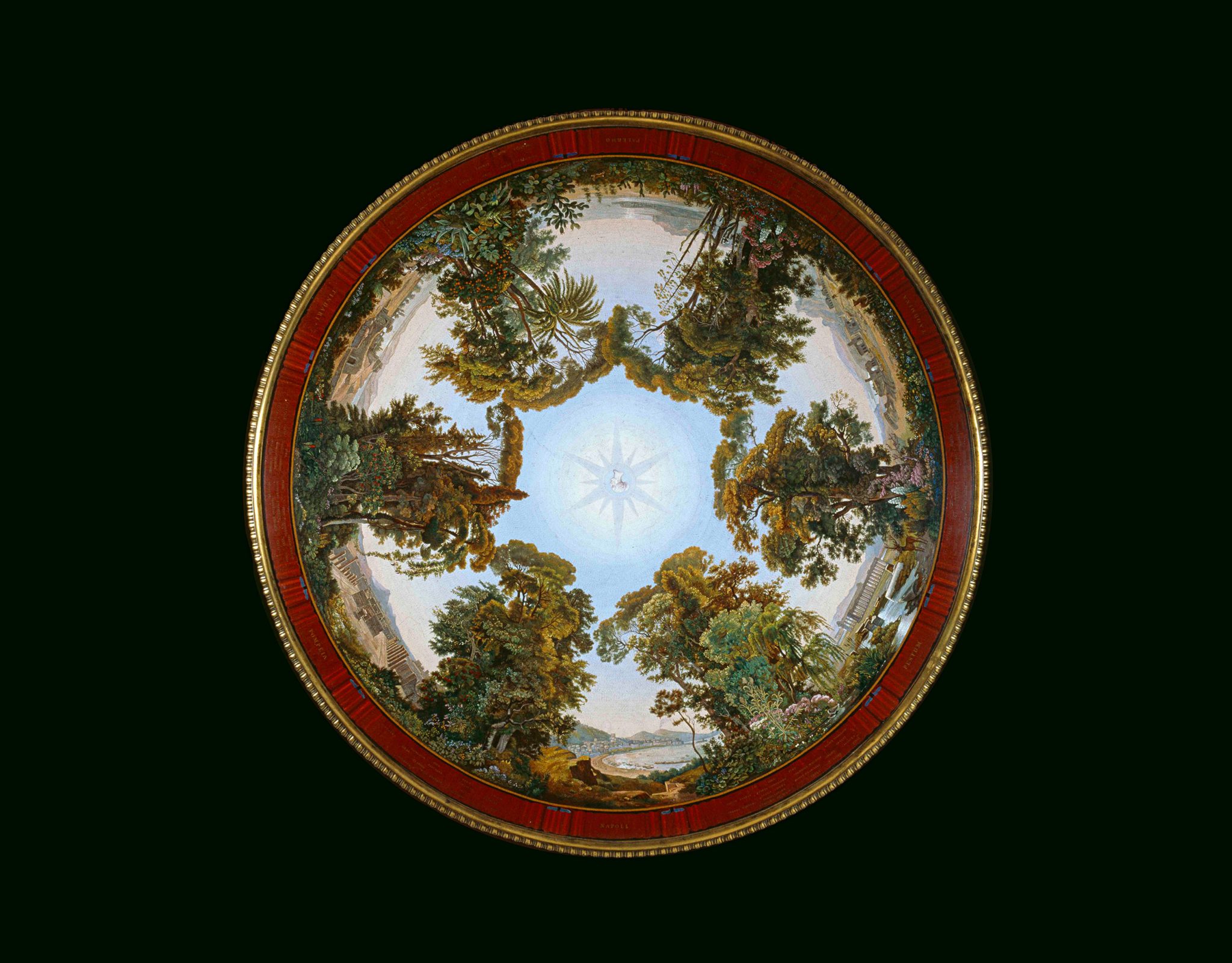
The Wekler image is reproduced by kind permission of The Gilbert Collection and credited to the Victoria and Albert Museum, London; its use is documentary and does not imply museum affiliation or endorsement. For corrections or additional documentation, contact [email protected].