Kempini guides · Prepared and updated
Painting with glass
A micromosaic is made from very small elements called tesserae, set individually into a prepared support to form an image or pattern. Historic Roman works often use coloured glass drawn into fine rods or canes and cut into tiny sections. The Italian terms mosaico minuto and smalti filati describe this miniature mosaic tradition and its drawn glass.
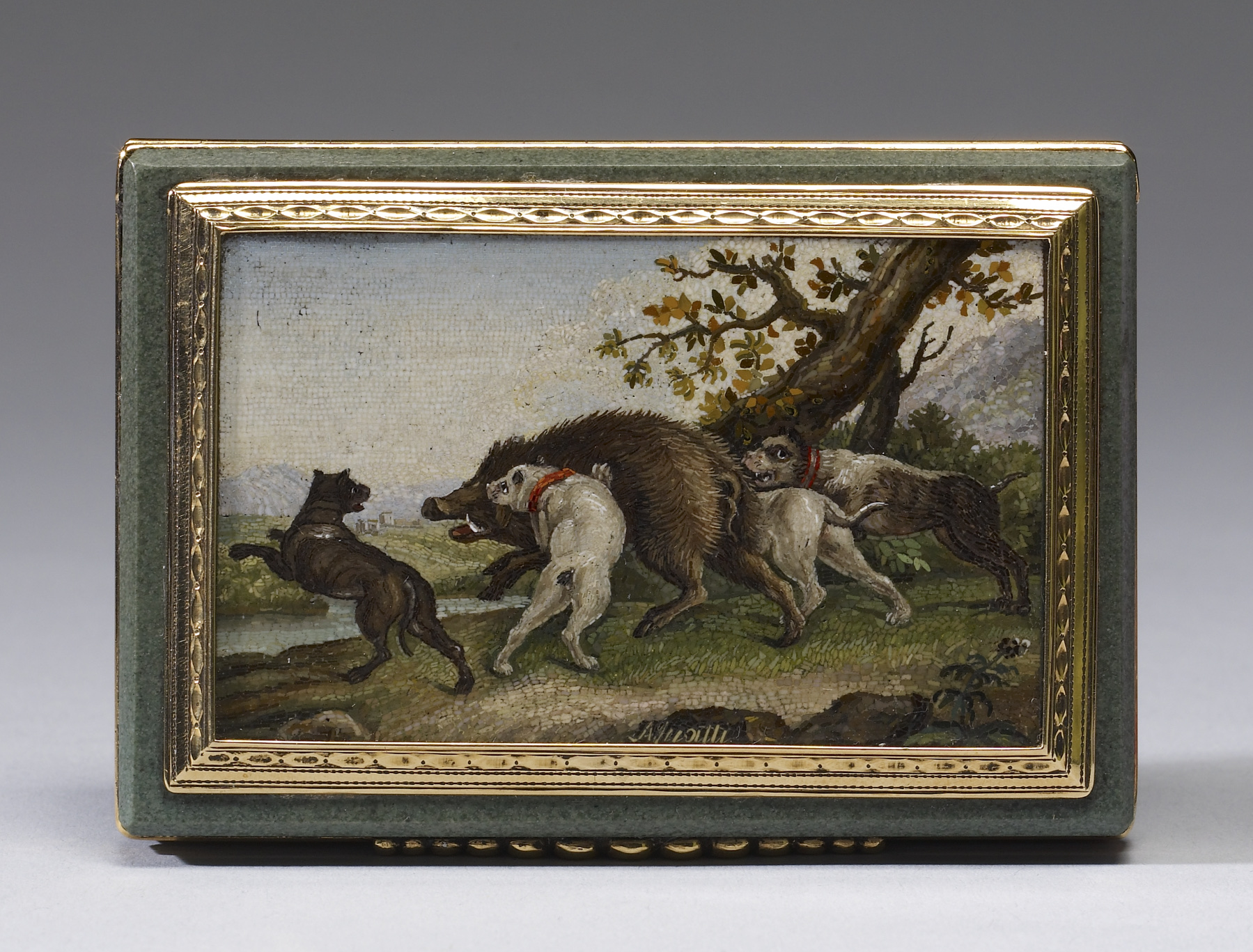
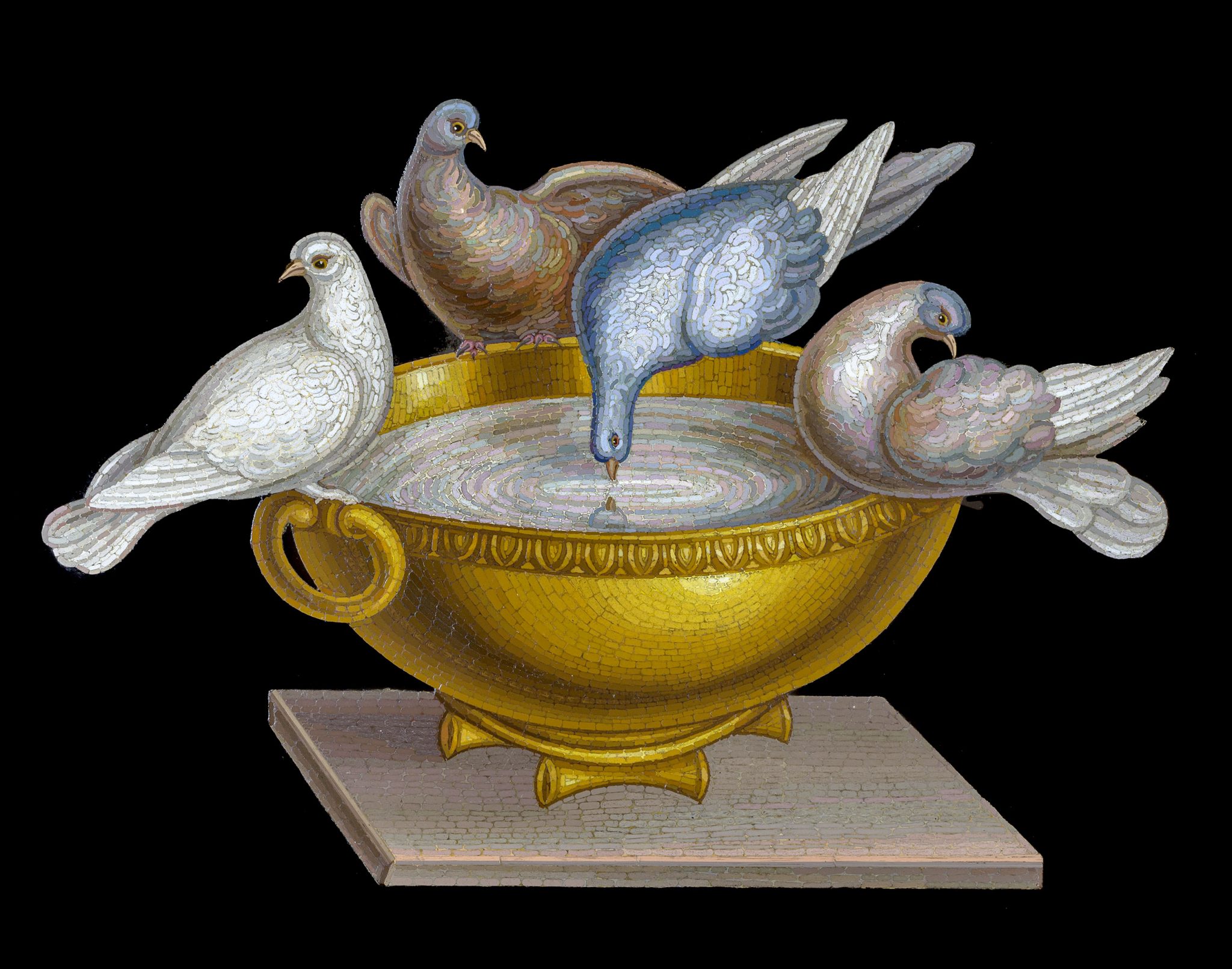
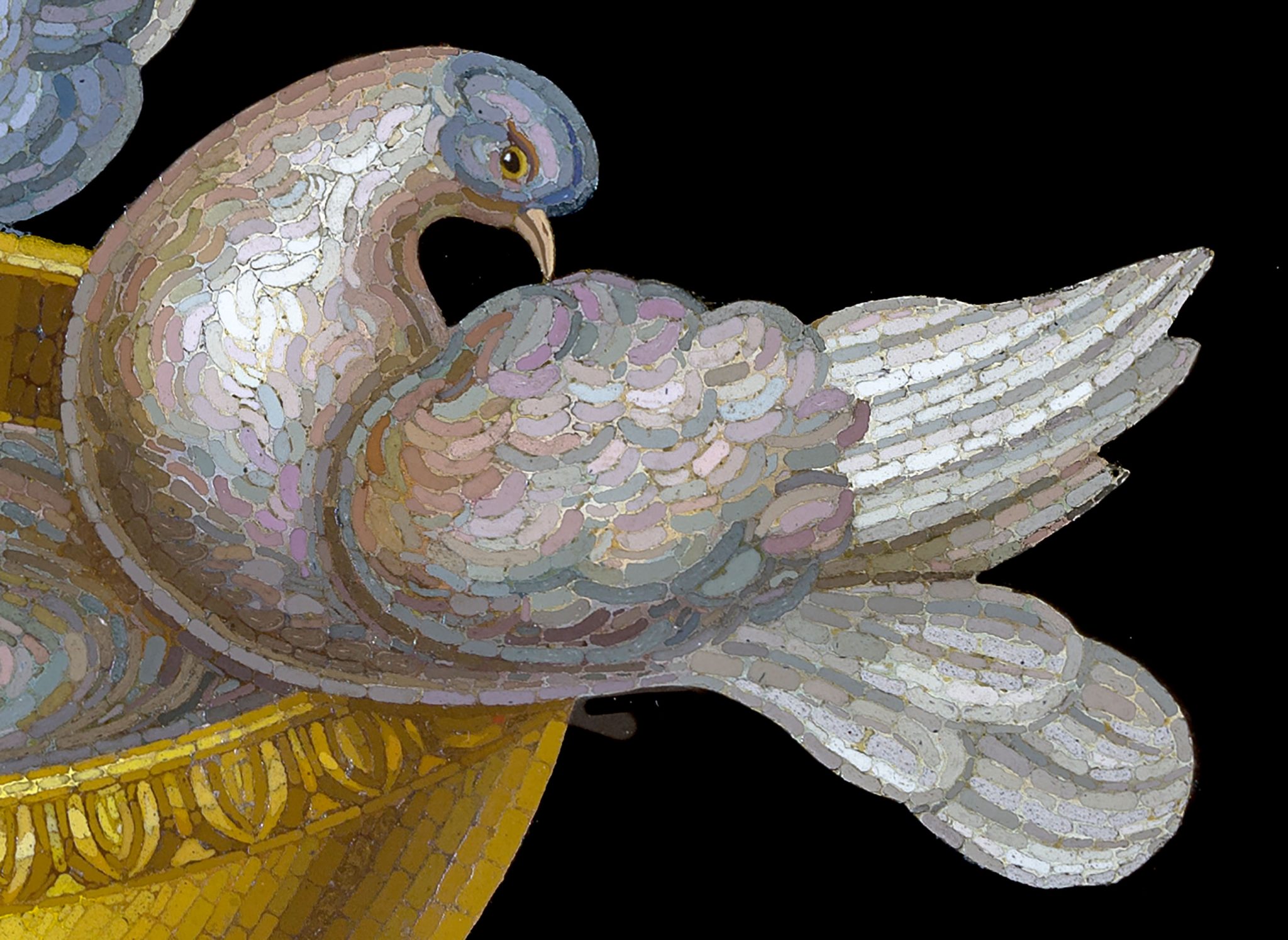
The pieces need not be identical squares. Their shapes and direction can follow a bird’s plumage, an animal’s coat or a distant building. Colour changes across many small elements allow the mosaicist to suggest light, shadow and texture. Tiny scale makes these decisions demanding; it does not, on its own, establish age or artistic quality.
Rome and the Grand Tour
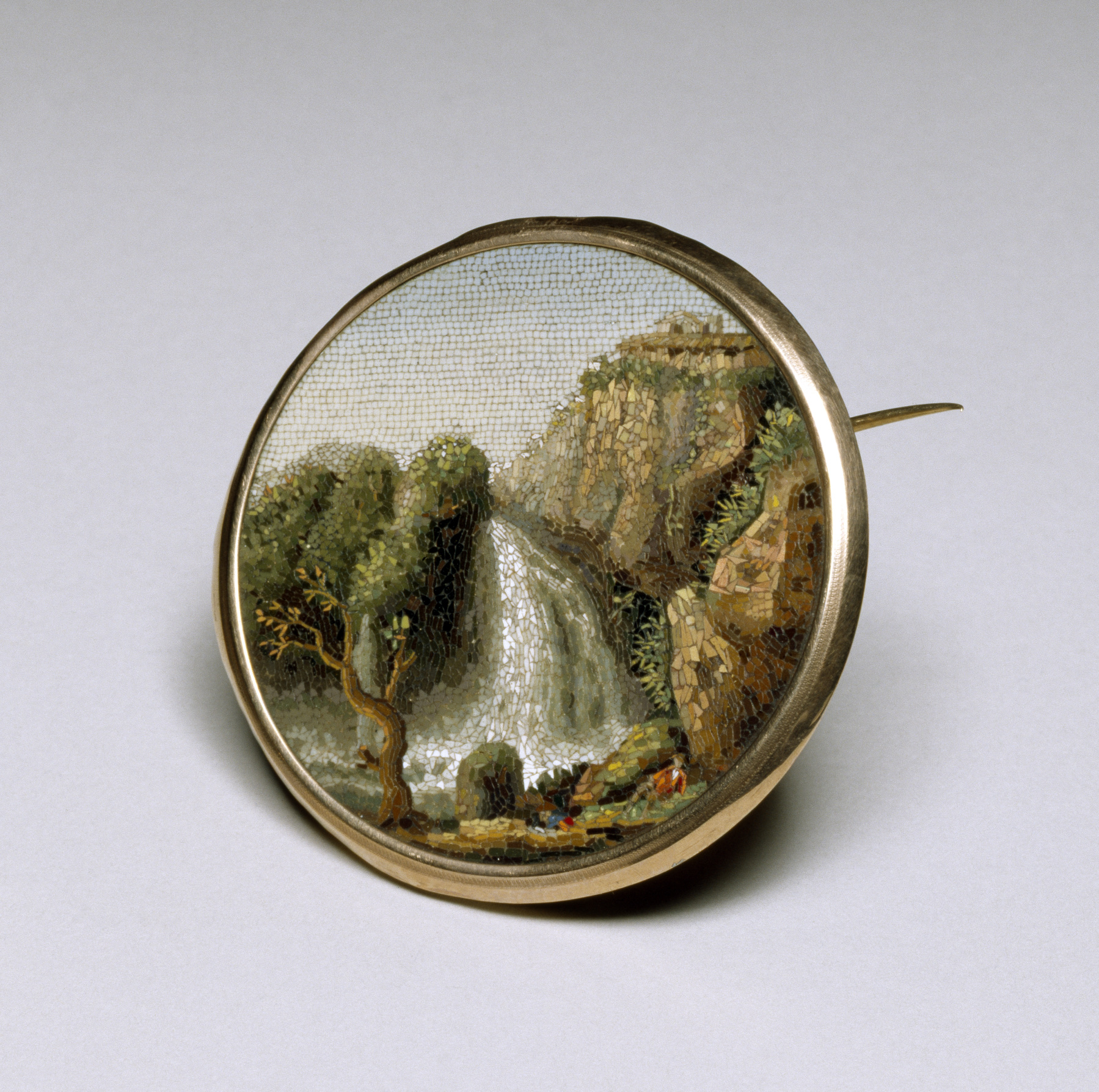
The miniature glass-mosaic tradition developed in Rome in the late eighteenth century, drawing on the city’s established mosaic skills. During the nineteenth century, travellers took home plaques, jewellery and other objects showing Roman buildings, landscapes, flowers and animals. More ambitious compositions also appeared as pictures, furnishings and table tops.
“Roman” describes a tradition and, where supported, a place of manufacture. It should not be confused with Roman antiquity. A view of an ancient monument is not evidence that the object itself is ancient, and a popular Grand Tour subject is not a maker’s signature.
Fineness is only the beginning
A specialist studies how the elements are used. Do the tesserae support the form and rhythm of the subject? Are the transitions between tones convincing? Does the composition remain coherent beyond its most intricate detail? Construction and condition belong to the same enquiry.
- Shape, direction and colour of the tesserae
- Handling of light, texture and space
- Composition, subject and scale
- Support, frame, setting and any later alterations
- Losses, cracks, fills and earlier restoration
- Attribution supported by evidence rather than a name alone
The value guide explains how these observations relate to commercial context. The identification guide shows what an owner can safely photograph without testing or dismantling an object.
Panels, jewellery, boxes and table tops
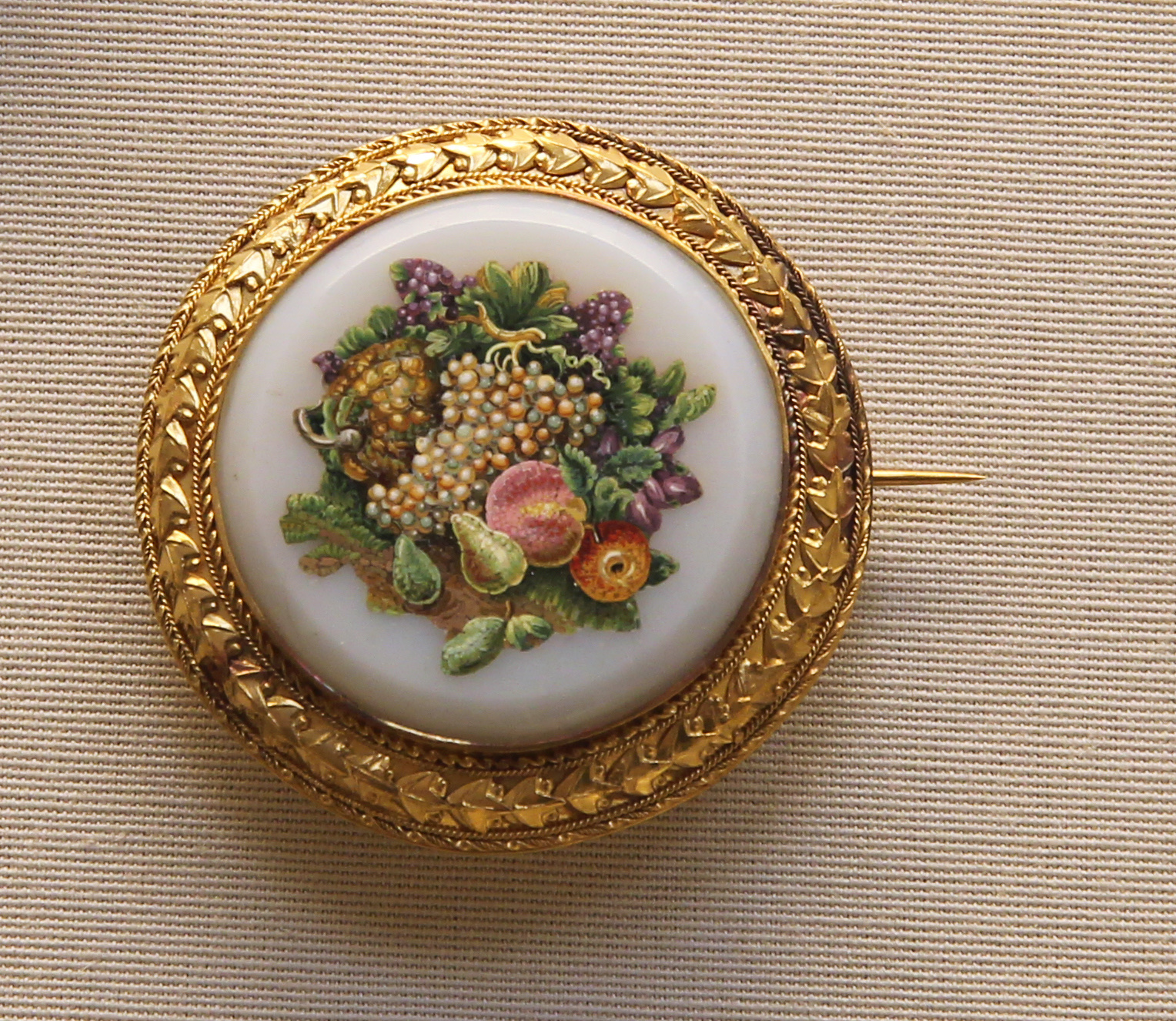
Micromosaic can be the principal image in a framed panel or a small insert within a larger object. Plaques may depict landscape or figurative scenes; brooches, pendants and rings combine mosaic with metalwork; boxes and table tops make the support and surrounding decoration part of the whole.
The mosaic and its mount may not be the same age. A later frame does not make the image modern, just as an old frame does not prove that everything within it is original. Keep the object together and photograph both the front and any safely accessible back.
Makers, workshops and attribution
Giacomo Raffaelli and Michelangelo Barberi are among the names associated with Roman micromosaics. A recognised name is a starting point for research, not a shortcut to attribution. A signature, inscription or family attribution should be considered alongside technique, construction and reliable documented comparisons.
Unsigned works can still deserve attention. Where evidence is incomplete, the distinction between a documented maker, an attribution, a workshop and a broader school matters. Kempini does not ask owners to settle those questions before making contact.

Guides for owners
- What determines a micromosaic’s value? Quality, condition, attribution and market context.
- How to identify an antique micromosaic Surface, construction and safe first observations.
- Inherited a micromosaic? What to preserve and how to begin without pressure.
Documented comparisons, carefully used
The Wekler plaques are a documented historical comparison for subject, technique and object type. They do not authenticate or value a privately owned object, and the museum reference does not imply endorsement of Kempini.
Learn about Kempini’s approach, or send photographs for a private first review. If a piece is inherited, begin with safe handling and preservation rather than cleaning it.
Sources and scope
This guide provides a general introduction, not an object-specific attribution, certificate or valuation. Its technique references include the V&A’s “How was it made? Micromosaics” (updated 17 April 2024) and “Micromosaics” from the Gilbert Collection (updated 10 March 2026), accessed 16 October 2026. These explain the medium; they do not substantiate a price for an owner’s work.
Public collections are cited as scholarly reference points. This does not imply affiliation, collaboration or endorsement. A comparison does not authenticate or value a privately owned object.
The Wekler image is reproduced by kind permission of The Gilbert Collection and credited to the Victoria and Albert Museum, London; its use is documentary and does not imply museum affiliation or endorsement. For corrections or additional documentation, contact [email protected].